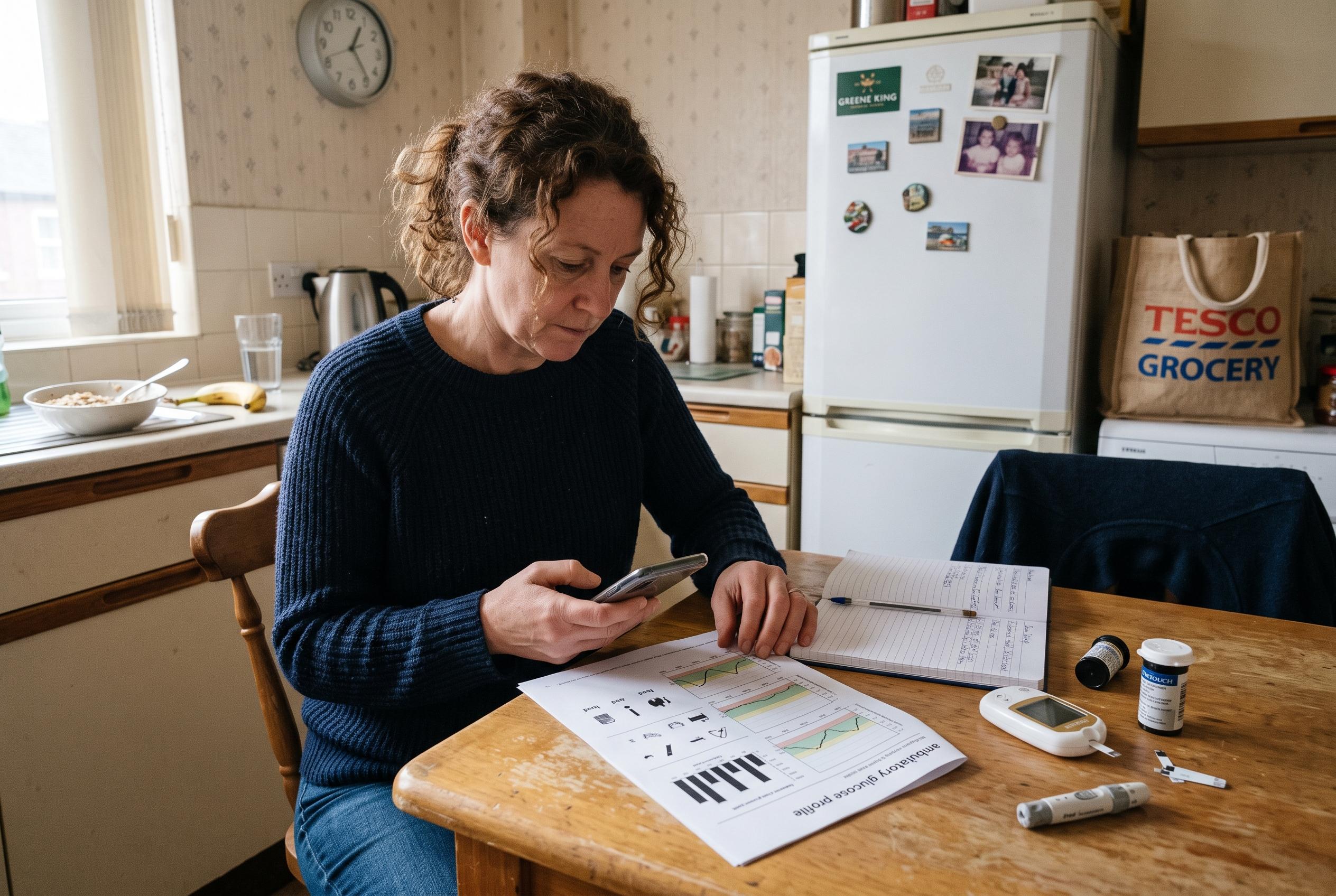

A new printable tool aims to help individuals with diabetes uncover underlying patterns in their glucose responses, facilitating more informed dietary and lifestyle decisions amid a shift towards pattern-based management.
After several weeks of checking blood glucose, many people discover an unexpected problem: the readings mount up, but the meaning stays elusive. The same meal can produce different responses on different days, and the source of a spike is not always obvious. Was it the food itself, the portion size, the time of day, or what it was eaten with? The challenge is no longer collecting data, but turning it into something useful.
That is the gap the Personal Glucose Pattern Analyzer is designed to fill. Rather than acting as a day-to-day log, it is intended as a focused review tool for one question at a time: whether timing changes the response to a meal, how much of a particular carbohydrate fits an individual range, whether protein or fat moderates the rise, and how long glucose typically takes to return to baseline after eating. The repeated tables across the pages are meant to make comparisons easier across several observations, instead of encouraging conclusions from a single reading.
The concept sits within a wider shift towards pattern-based diabetes management. Research published in journals indexed by PubMed has shown that automated pattern detection in glucose monitoring can identify abnormal trends more efficiently than manual review, while older clinical writing has stressed that systematic self-monitoring only becomes truly valuable when it is analysed for recurring behaviours rather than read as isolated numbers. Other platforms now pursue similar aims in digital form: apps such as mySugr highlight recurring highs and lows from continuous glucose monitoring data, while newer AI tools claim to estimate the likely glucose impact of meals from photographs or to analyse the effects of sleep, exercise and stress.
The analyzer is meant to complement, not replace, an existing log such as a meal diary or a structured glucose workbook. By itself it does not create the raw information; instead, it provides a framework for comparing that information in a more disciplined way. Its purpose is practical rather than clinical: to help people see patterns more clearly and make better-informed decisions about what their readings are showing. The product is offered as a 20-page printable PDF on Etsy, designed for occasional use when a specific question needs answering rather than for constant daily administration.
Disclaimer: This content is for informational purposes only and is not intended to be a substitute for professional medical judgment, advice, diagnosis, or treatment.