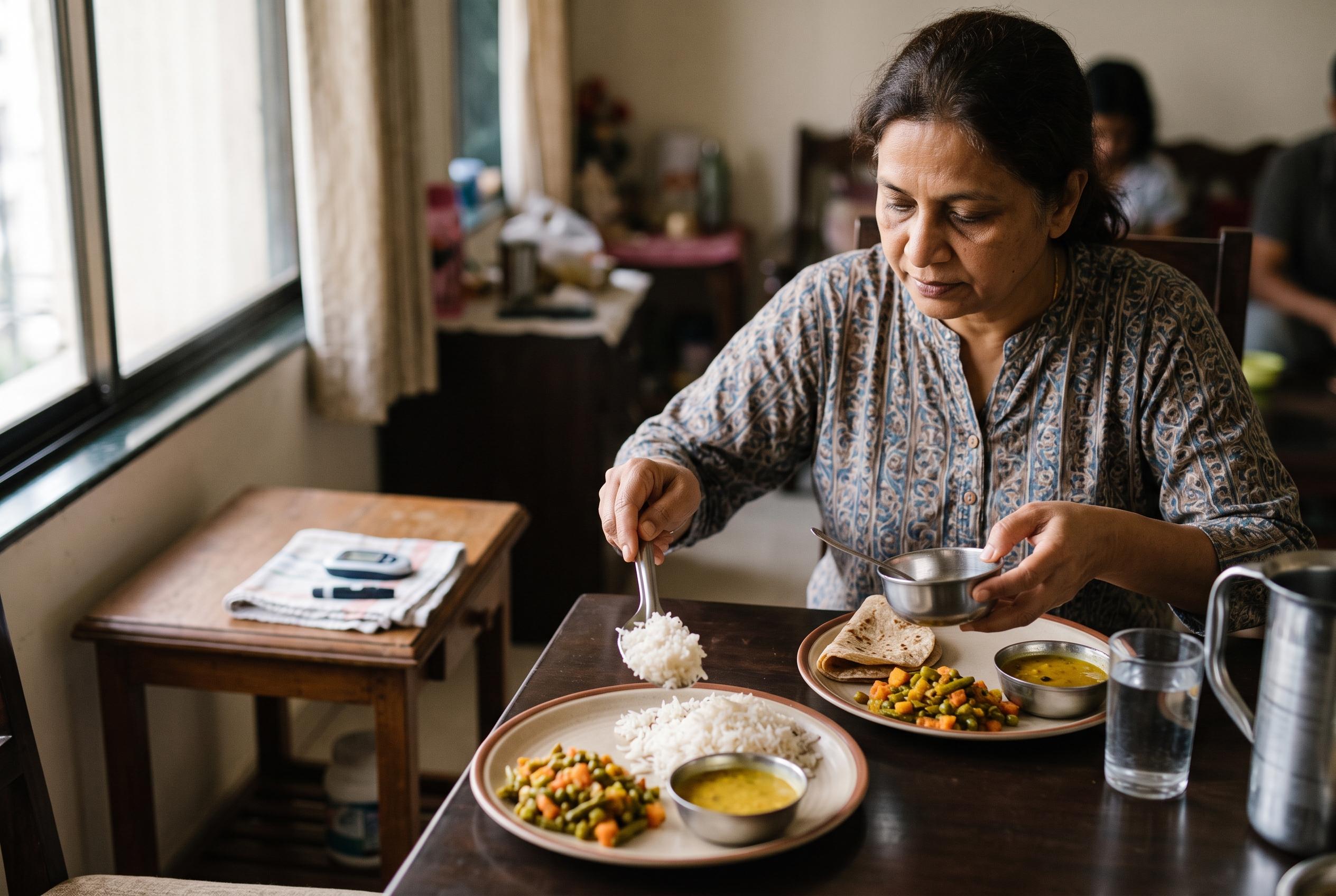

An Indian Express health column challenges the rice versus roti debate, emphasising that weight gain is driven by meal size, food processing, and lifestyle habits rather than the choice of staple food alone.
In a widely read Indian Express health column, Delhi endocrinologist and senior consultant at Indraprastha Apollo Hospitals, Delhi, argues that the familiar rice-versus-roti debate misses the larger point: weight gain is driven less by a single staple than by the full meal, the portion size and the rest of the day’s habits. The column says there is no special genetic protection for communities that eat one grain rather than another; what matters is how food is processed, what it is eaten with and how much energy the body uses overall.
The central argument is that neither rice nor wheat becomes harmless simply because it has long been part of a region’s diet. The article notes that older meal patterns usually involved smaller servings, more pulses and vegetables, less refined grain and far more physical activity. By contrast, modern plates often carry larger helpings, more polished cereals and more calorie-dense accompaniments, alongside snacks, sugary tea and packaged foods.
According to the Indian Express piece, the body handles starch from rice, wheat or millet in broadly similar fashion once it is digested into glucose. People with more muscle and greater activity can process that glucose more efficiently, while those with less muscle, more abdominal fat or insulin resistance may see a stronger blood sugar rise. The article also points out that many Indians develop type 2 diabetes at lower body mass indices than Europeans, which is one reason a person can look slim yet still have excess internal fat or fatty liver.
The column also stresses that not all rice, roti or millet is equal. Polishing, milling, grinding and cooking method all influence how quickly starch is absorbed. A small serving of rice with dal, vegetables and protein is very different from a large plate of polished rice with potatoes. Likewise, a modest home-made roti is not the same as naan, stuffed paratha or packaged biscuits labelled “whole wheat”. The article adds that millets can offer more fibre and micronutrients when eaten in minimally processed form, but they are not a magic fix and still need sensible portions.
That broader view is echoed by other nutrition explainers, which consistently say the real issue is excess calories rather than one particular grain. Nourish says there is no direct evidence that rice alone causes weight gain, while MNT and Dietox Nutrition make the same point about roti, stressing portion control and balance. Times of India similarly reports that both rice and roti can fit into a healthy diet when paired with vegetables and protein, and Shellel and Oliva Clinic both underline the importance of serving size, fibre and glycaemic impact. Taken together, the advice is less about choosing sides than about reshaping the plate: eat less refined grain, add more vegetables and protein, and move more after meals.
Disclaimer: This content is for informational purposes only and is not intended to be a substitute for professional medical judgment, advice, diagnosis, or treatment.