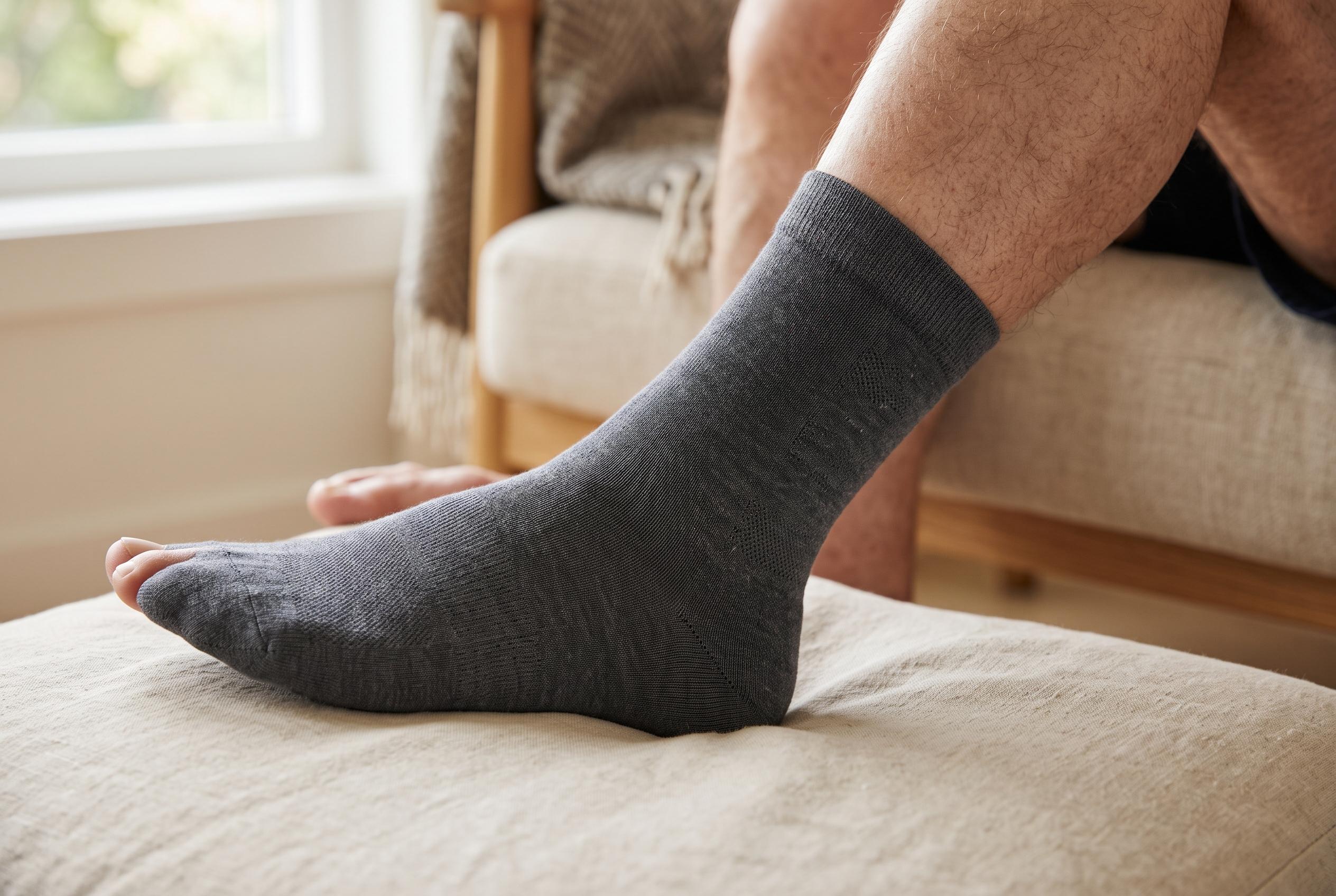

Specialised socks designed with seamless construction, moisture control, and non-binding design are essential for protecting vulnerable feet in those with peripheral neuropathy, according to recent guidance from podiatrists and health resources.
For people living with peripheral neuropathy, socks are not a small wardrobe choice but part of daily foot protection. When sensation is reduced, a raised seam, tight cuff or moisture-trapping fabric can irritate skin long before it is noticed, raising the risk of blisters, sores and infection. The most practical option, according to the guide from Naples Podiatrist, is a seamless diabetic sock with a non-binding top, moisture-wicking fibres and light cushioning in the heel and forefoot.
That advice is broadly consistent with guidance from Healthline, Neuropathy Compass and Neuropathy Resource, all of which stress the same basic features: smooth interiors, breathable materials and cuffs that do not cut into the leg. The Diabetic Sock Club explains why seamless construction matters so much: the toe seam in a standard sock can create a ridge that rubs against already vulnerable skin. Michigan Foot Doctors adds that the wrong sock can also worsen maceration, the softening of skin caused by trapped moisture.
Compression deserves particular caution. The Naples Podiatrist guide recommends only mild graduated compression, generally under 20 mmHg, and only after circulation has been checked. That distinction matters because pressure that is too firm can create new problems in feet that may not give early warning signs. The point of compression in this setting is to ease swelling, not to replace a vascular assessment.
Climate also shapes the best choice. In hot, humid conditions, moisture-wicking synthetic blends can help keep feet drier than cotton, which can hold sweat against the skin. That is important when a person cannot easily feel dampness building up. For active people who spend much of the day standing or walking, padded crew socks may offer useful relief at the heel and ball of the foot, though the extra bulk can make shoes feel tighter.
Not every neuropathy patient needs the same sock. Wool blends can be helpful for people who feel cold or tingling feet, especially in cooler weather, while bamboo and other softer low-friction fabrics may suit people with irritated or fragile skin. The Naples Podiatrist guide argues that the best choice depends on the main problem being managed: pressure, sweat, swelling or temperature discomfort.
Even so, the central message is that socks manage risk rather than solve the underlying condition. Peripheral neuropathy can hide damage until it is advanced, so daily visual foot checks remain more important than any single product feature. Light-coloured interiors can make it easier to spot blood or drainage, but they are only a tool; the real safeguard is looking at the feet every day.
The wider lesson from the various guides is straightforward: avoid tight elastic, thick seams and moisture-heavy fabrics, and choose a sock that matches the day’s needs. For most people with neuropathy, a seamless diabetic sock offers the best all-round protection, with other styles reserved for swelling, heavy activity, colder months or particularly sensitive skin.
Disclaimer: This content is for informational purposes only and is not intended to be a substitute for professional medical judgment, advice, diagnosis, or treatment.