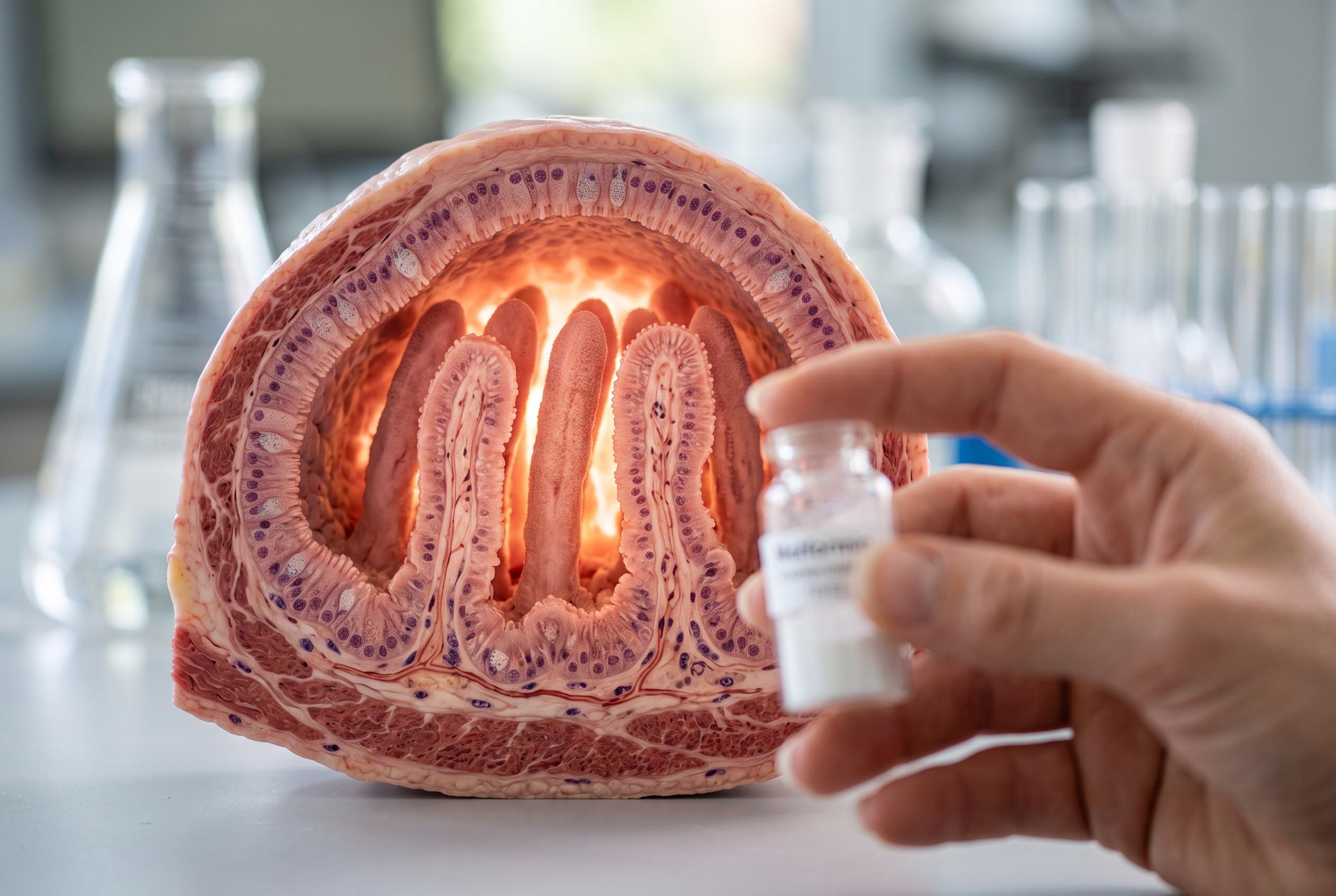

A recent study challenges longstanding beliefs by pinpointing the intestine as the main target of metformin’s glucose-lowering effects, offering fresh perspectives on its mechanism and potential for personalised treatment.
For decades, metformin has been the first-line medicine for many people with type 2 diabetes, yet its main route in the body has remained unusually hard to pin down. A new study in Nature Metabolism suggests the drug’s strongest acute effect comes not from the liver, as many earlier theories proposed, but from the lining of the intestine, where it appears to interfere with mitochondrial complex I and push cells to take up and burn more glucose. Live Science reported that the finding helps explain why the medication has been so effective despite years of uncertainty over its mechanism.
The Northwestern University team behind the research said metformin seems to alter gut-cell mitochondria, the structures that help produce energy. One of the clearest clues was a sharp fall in blood levels of citrulline, a metabolite made almost entirely by intestinal mitochondria. In experiments with mice engineered to have an alternative pathway around complex I, metformin was far less effective, and its blood-sugar-lowering impact fell by about 80%, indicating that the mitochondrial target in the gut is central to the drug’s immediate action.
The work fits into a long-running scientific debate. Earlier studies had suggested that metformin acts in the liver by damping glucose production, while other research pointed to effects in the intestine and even changes in the gut microbiome. A 2019 review in Nature Reviews Endocrinology and a 2017 review in Diabetologia both noted that metformin appears to act through several pathways, including mitochondrial complex I inhibition and reduced hepatic glucose output. The new paper strengthens the case that the intestine is a major site of action, even if it does not rule out additional effects elsewhere.
Navdeep Chandel, one of the study authors, told Live Science that metformin’s mechanism has been a moving target for years, with new explanations often replacing old ones. Manuel Vázquez Carrera of the Sant Joan de Déu Research Institute, who was not involved in the study, said metformin has a complex profile that makes a single explanation difficult. He also cautioned that much of the evidence comes from male mice, leaving open questions about how well the findings translate to women and to people more broadly. The researchers say they now want to examine how the drug’s gut effects interact with the liver and the microbiome.
Disclaimer: This content is for informational purposes only and is not intended to be a substitute for professional medical judgment, advice, diagnosis, or treatment.