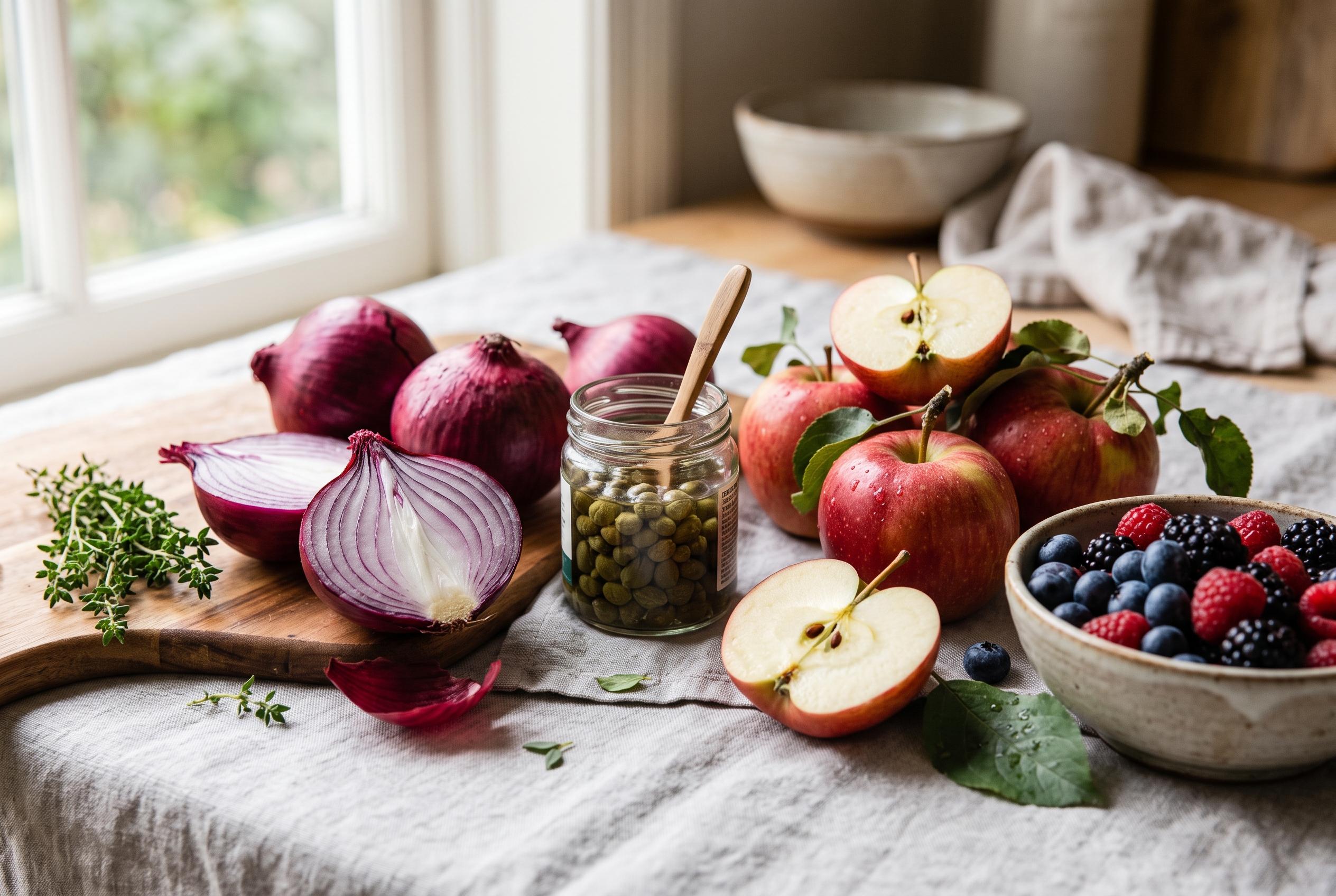

While laboratory studies highlight quercetin’s multi-faceted influence on insulin pathways, inflammation, and gut health, clinical evidence remains inconsistent, underscoring challenges in translating its promise into effective treatments.
Quercetin has emerged as one of the more closely watched plant compounds in metabolic research, but the evidence suggests a gap between promising laboratory mechanisms and modest human outcomes. The review in DovePress argues that the flavonoid can influence insulin resistance through several routes at once, including insulin signalling, inflammation, oxidative stress, gut microbes and drug delivery design. Yet clinical studies remain mixed: a 2015 trial in healthy adults found no meaningful effect on insulin resistance, while a 2019 meta-analysis reported little overall impact except in some longer or higher-dose studies, and a 2023 umbrella review likewise found no clear change in insulin resistance despite some benefit for systolic blood pressure and insulin levels.
At the cellular level, the review highlights quercetin’s ability to support the IRS-1/Akt/FOXO1 pathway, which helps cells respond to insulin and limits excess glucose production by the liver. It also points to AMPK, a central energy-sensing enzyme, as another major target. By activating AMPK, quercetin may encourage glucose uptake, improve fat handling and dampen mTOR-driven feedback that can worsen insulin resistance. Animal and cell studies cited in the review suggest these effects can translate into higher GLUT4 activity in muscle and fat tissue, along with lower expression of gluconeogenic enzymes in the liver.
The compound’s anti-inflammatory profile may be just as important. The review describes quercetin as a strong antioxidant that can blunt the ROS/NF-κB/NLRP3 inflammatory cascade, a network repeatedly linked to obesity-related metabolic dysfunction. Earlier human cell work also supports this theme: a 2010 study of primary human adipocytes found quercetin reduced TNF-α-driven inflammatory gene expression and secretion, and did so at least as well as trans-resveratrol in some measures. The newer review extends that idea to senescent fat cells, endothelial inflammation and mechanosensitive Piezo1 signalling, suggesting quercetin may ease the chronic low-grade inflammation that helps lock in insulin resistance.
Another strand of evidence centres on the gut. According to the review, quercetin can reshape microbial communities, raise levels of beneficial bacteria such as Akkermansia and reduce patterns associated with intestinal inflammation and barrier damage. That matters because a leaky gut can allow bacterial products such as lipopolysaccharide into the bloodstream, fuelling systemic inflammation and worsening metabolic control. The review also links quercetin to changes in microbial metabolites and amino acid pathways, suggesting its effects may run through the gut-liver axis rather than only acting directly on liver or muscle tissue.
The biggest obstacle remains translation. Quercetin is poorly soluble and rapidly metabolised, so researchers are looking at glycosides, methylated derivatives, liposomes, nanocrystals and other delivery systems to improve absorption and tissue exposure. The review argues that small structural changes can alter how the molecule behaves, including whether it binds directly to targets such as ChREBP, another transcription factor involved in glucose and lipid metabolism. Even so, the clinical record is still too thin to call quercetin a proven treatment for insulin resistance. For now, it looks more like a useful lead compound than a finished therapy.
Disclaimer: This content is for informational purposes only and is not intended to be a substitute for professional medical judgment, advice, diagnosis, or treatment.