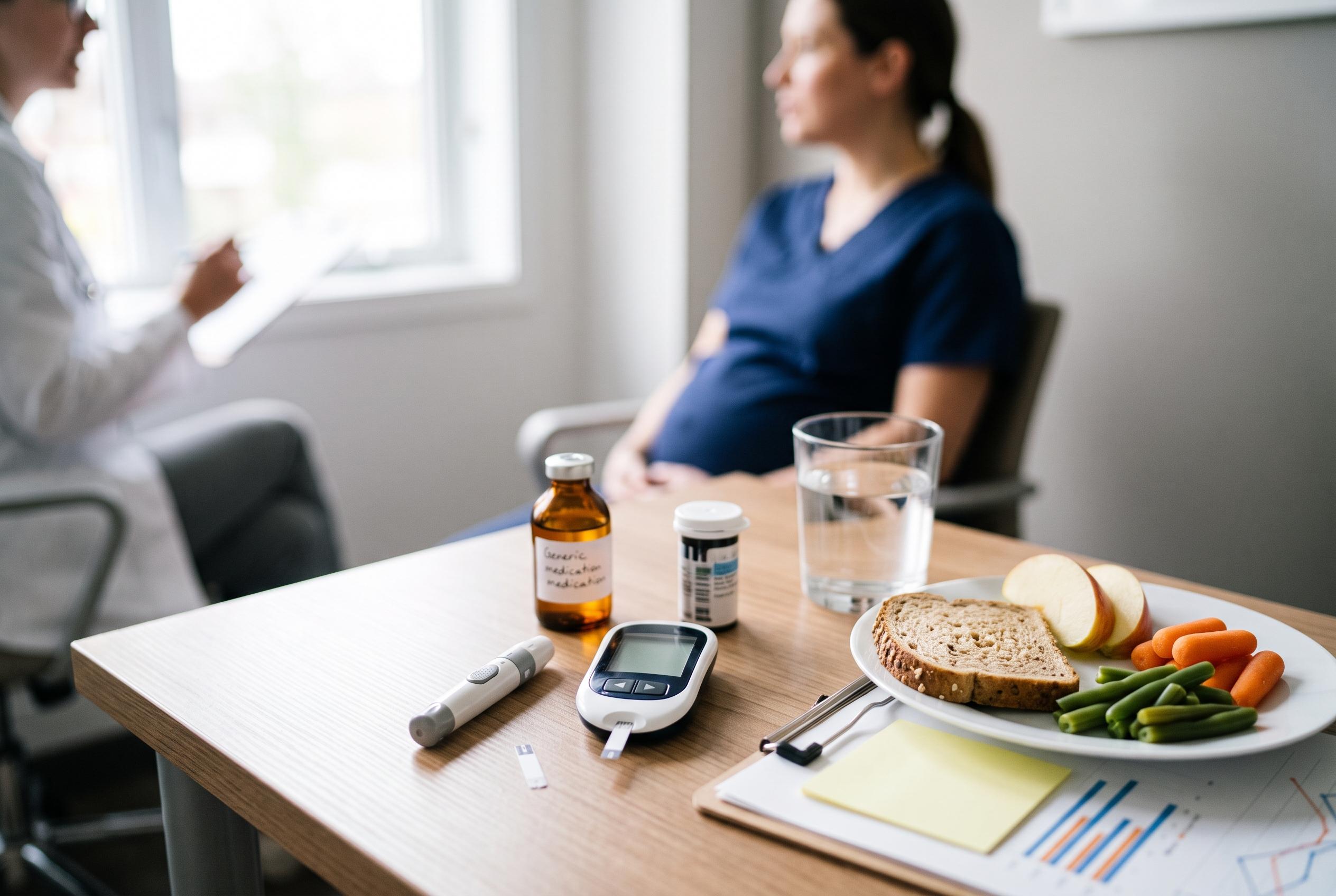

While dexamethasone can help mature a preterm baby’s lungs, its temporary effect on blood sugar levels complicates management for pregnant women with gestational diabetes, requiring careful monitoring and communication with healthcare providers.
Dexamethasone is sometimes given during pregnancy to help a baby’s lungs mature more quickly when preterm birth is a concern. The treatment can be valuable, but it also has a well-known downside: a temporary rise in blood sugar. For pregnant women already managing gestational diabetes, that effect can be unsettling, especially when readings jump well above their usual range.
Gestational diabetes itself is common enough that doctors routinely watch for it from around 24 to 28 weeks of pregnancy. Johns Hopkins Medicine and the American College of Obstetricians and Gynecologists say it develops when pregnancy hormones make the body more resistant to insulin, which raises blood glucose. Most women manage it with food changes, exercise and regular glucose checks, though some need insulin. Good control matters because persistent high sugar can increase the risk of a larger baby and low blood sugar in the newborn after delivery.
That is why dexamethasone can be tricky for women with gestational diabetes. The steroid can push sugar higher for roughly 24 to 72 hours, with the biggest effect often in the first two days after treatment starts. In practical terms, a sudden post-meal reading that would normally look alarming may be an expected short-term response to the medicine rather than a sign that the diabetes has permanently worsened. Even so, doctors usually want to know about every elevated reading so they can decide whether extra monitoring or temporary insulin is needed.
A drop in the baby’s movement can also happen after dexamethasone, and that too is recognised in medical guidance as a temporary effect of the drug. It may reflect changes in fetal behaviour rather than a problem with the baby, but it should still be tracked carefully. If movement feels markedly reduced or does not return to normal after the steroid window passes, obstetric teams often advise hospital assessment, such as a non-stress test, to confirm the baby is well.
The message from clinicians is consistent: do not stop dexamethasone on your own. The aim of the treatment is to protect the baby if early delivery is possible, and the short-lived blood sugar spike is usually managed rather than avoided. Women with gestational diabetes are generally advised to check glucose more often, keep a record of results and stay in close contact with their obstetrician or diabetes specialist. If the numbers remain high after the steroid has worn off, that may point to the underlying pregnancy diabetes needing a fresh treatment plan.
Disclaimer: This content is for informational purposes only and is not intended to be a substitute for professional medical judgment, advice, diagnosis, or treatment.